

Economic Outlook August 2026
8/3/2026 1:00:00 PM

Double-digit stock market returns are common. Over the last 100 years, the S&P 500 had double-digit calendar year returns 59 times. The problem is they are not very consistent. Double-digit returns two years in a row occurred 32 times. Double-digit returns three years in a row occurred 11 times.
Sometimes the stock market goes up because it represents good underlying value. Sometimes it's due to new technology that investors are excited about. Sometimes it’s due to the prospect of growth increasing. There are other reasons, but the net effect is that cash flow into the stock market rises while the overall number of total shares of stock available for purchase remain mostly stable. Those circumstances lead to the overall price of stocks rising.
What I find interesting about cash going into U.S. equities over the last few years is the noticeable increase from foreign investors. Below is a chart showing net monthly purchases of U.S. stocks by foreign investors.
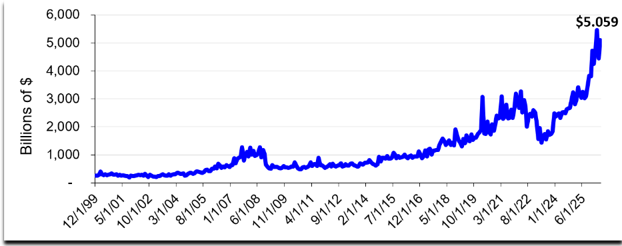
Perhaps this is a testimonial that the U.S. hosts the most innovative companies in the world and investors from all over the globe come to the U.S. market for access to those companies. My concern is foreign investors could change their minds, which could lead to this money leaving the market. As it stands, it looks like foreign investors hold about $25 trillion of U.S. equities with U.S. total stock market capitalization of around $80 trillion.
Getting back to the original topic, if money flows out of the market, stock prices go lower. Outright foreign selling, or perhaps even slowing foreign investment, could have downward pressure on U.S. market levels.
I’m not trying to predict this scenario. Longtime readers know there needs to be some sort of catalyst to change investors’ minds. Artificial intelligence and all the support industries seem to continue to hold the attention of investors even in the face of recent volatility.
At this point, I’m not sure what the catalyst would be. However, experience has taught me that the prospect of volatility cannot be ignored.
One quick note about the recent Federal Reserve announcement. The market is concerned that the Fed will no longer provide forward interest rate guidance. My perspective is the opposite. I believe it’s the market’s responsibility to respond to conditions that exist rather than taking forward guidance from the Fed. My sense is that the market missed one of the big points being made by Chair Kevin Warsh at his press conference. It sounded to me like he kept the door open for a change in the fed fund rate before the next scheduled meeting in September.
As always, thank you for your business and confidence in Bell.
Greg Sweeney is the chief investment and economic strategist at Bell Institutional Investment Management. He guides the investment strategy, and this outlook is his perspective on the latest market trends and what they could mean for investors. Any views, strategies or products discussed in this article may not be appropriate or suitable for all individuals and are subject to risks.

Greg Sweeney, CFA®
SVP/Chief Investment & Economic Strategist
Products and services offered through Bell Bank Wealth Management are: Not FDIC Insured | No Bank Guarantee | May Lose Value | Not a Deposit | Not Insured by Any Federal Government Agency
A Complete Approach to Wealth
Whether you’re building personal wealth, managing complex finances, or overseeing assets for an organization, Bell Bank Wealth Management delivers personalized strategies designed around your goals.