

Economic Outlook September 2026
9/9/2026 1:00:00 PM

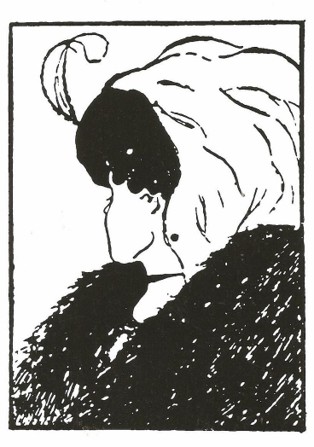
The famous “Elderly Woman/Young Woman” optical illusion first appeared on a German postcard in 1888. Its popularity was supported by the British cartoonist William Ely Hill, who adapted the image and published the illusion under the title "My Wife and My Mother-in-Law" in Puck magazine in 1915.
Optical illusions exploit the brain's tendency to fill in gaps to complete patterns, often leading to ambiguous interpretations of the information being received. In this case, the same image can produce two different perceptions – a young woman and an elderly woman.
The important point here is not the illusion itself. It’s that two people can look at the exact same information and see something entirely different. This is relevant to today's economic conditions.
Kevin Warsh, the current Fed chair, appears to perceive short-term interest rates as adequate and perhaps a bit low, while the Secretary of the Treasury, Scott Bessent, seems to perceive longer-term interest rates as being too high. Like an optical illusion, can they both be looking at the same economic data yet see things differently?
The Federal Reserve sets short-term interest rates in an effort to moderate inflation consistent with stable economic growth and employment. If short-term rates are too low, inflation tends to creep into the economy as growth speeds up. If short-term rates are too high, growth tends to slow down along with underlying employment. This is a delicate balance that is no small task to navigate.
While the Fed gets its say on short-term rates, the market determines interest rates along the rest of the yield curve. The market looks at the prospect of future inflation, future economic growth, risk and the supply of available bonds and determines an interest rate it is satisfied with.
The current 10-year U.S. Treasury bond interest rate is 4.80%. Let’s break that rate down into hypothetical components for discussion. For example, let’s say the bond market is confident the Fed will get back to 2% inflation, future economic growth is expected to be 2.1%, and term structure risk is 0.70%. Add those together and you get 4.8%. If these hypothetical components change enough, the market will adapt by expressing its opinion in the form of rising or falling interest rates.
My example above did not include new supply of bonds. In the case of the U.S. government, annual deficit spending is about $2 trillion. This means $2 trillion in government bonds are being added annually to the $40 trillion already outstanding. That is a lot of supply to absorb. Interest rates on U.S. Treasury bonds need to be attractive enough to convince investors to sell existing investment holdings and move their money into government bonds.
We are a small participant in the overall market. As we look at current conditions, our perspective is that inflation won’t get down to 2% anytime soon, economic growth is looking like 2% to 2.5%, and the supply of bonds dictated by deficit spending will continue to increase. We believe that interest rates have the potential to continue moving higher along the yield curve. A 5% yield on the 10-year Treasury would not be a stretch. We would tend to agree with Kevin Warsh’s assessment of economic conditions.
Scott Bessent, on the other hand, seems to believe longer-term interest rates are too high. To that end, he used money from the U.S. Treasury to purchase government bonds in an effort to push longer-term interest rates lower. The Treasury can influence the market but cannot dictate the market’s perception of the appropriate long-term interest rates. One reason is that the money in the U.S. Treasury that could be used for government bond purchases is well short of the $2 trillion needed annually just to absorb the new bonds being issued to cover the deficit. Sure, Secretary Bessent could print money and use it for bond purchases, but that would just exacerbate inflation as more money was injected into the system.
We remain defensive in our positioning on bond portfolios, looking to capture incremental income without extending duration amid the prospect of rising interest rates.
Thank you for your business and confidence in Bell!
Greg Sweeney is the chief investment and economic strategist at Bell Institutional Investment Management. He guides the investment strategy, and this outlook is his perspective on the latest market trends and what they could mean for investors. Any views, strategies or products discussed in this article may not be appropriate or suitable for all individuals and are subject to risks.

Greg Sweeney, CFA®
SVP/Chief Investment & Economic Strategist
Products and services offered through Bell Bank Wealth Management are: Not FDIC Insured | No Bank Guarantee | May Lose Value | Not A Deposit | Not Insured by Any Federal Government Agency.
A Complete Approach to Wealth
Whether you’re building personal wealth, managing complex finances, or overseeing assets for an organization, Bell Bank Wealth Management delivers personalized strategies designed around your goals.